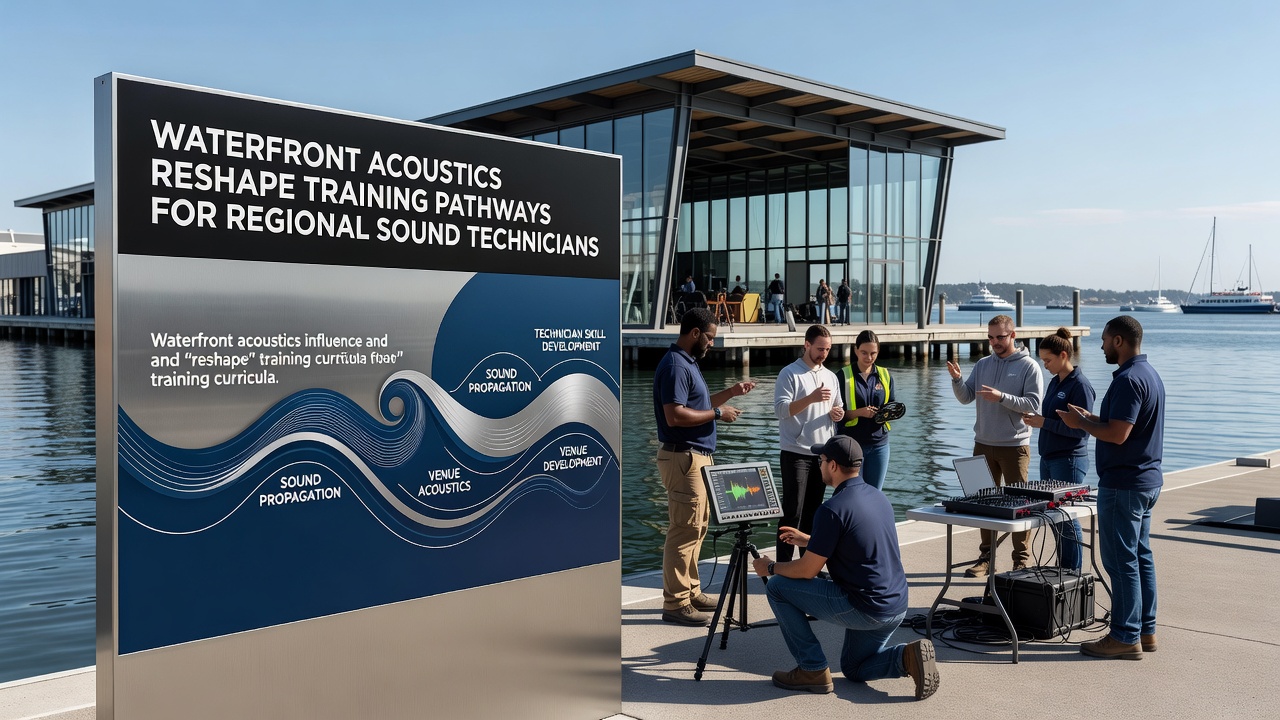
Leon Flores · 23 October 2026
Waterfront Acoustics Prompt Expanded Certification Programs for Regional Sound Technicians
Regional sound technicians now navigate updated training requirements because waterfront acoustics introduce variables such as water surface reflections, tidal shifts, and prevailing winds that alter sound propagation in measurable ways, and certification bodies have responded by integrating these factors into core curricula since early 2026.
Coastal venues report that standard indoor protocols fall short when humidity levels and wave patterns change audio clarity during live events, which has led training providers to incorporate field simulations that replicate these conditions for technicians working in areas like Melody Bay and similar districts.
Key Acoustic Factors at Waterfront Sites
Water acts as a reflective medium that can amplify low frequencies while scattering higher ones, and technicians must calculate these effects using specialized software during setup, according to studies from the Acoustical Society of America. Wind patterns further complicate matters by carrying sound unevenly across open water, requiring adjustments to speaker arrays and microphone placement that differ from urban or enclosed environments.
Data from monitoring stations installed along several coastal regions shows that tidal cycles influence reverberation times by up to 30 percent, prompting programs to teach real-time monitoring techniques that account for these fluctuations throughout an event.
Revised Training Pathways and Certification Updates
Training institutions have added modules on aquatic acoustics and environmental modeling to existing sound engineering courses, and participants complete practical assessments that involve deploying equipment under simulated waterfront conditions. These changes align with October 2026 deadlines set by regional accreditation panels, which now require documented hours in variable acoustic settings before full certification.
One program in a Pacific coastal area pairs classroom instruction with on-site placements at festival grounds, where trainees adjust systems while accounting for incoming tides and shifting breezes, adn completion rates have risen as hands-on components replace purely theoretical approaches.
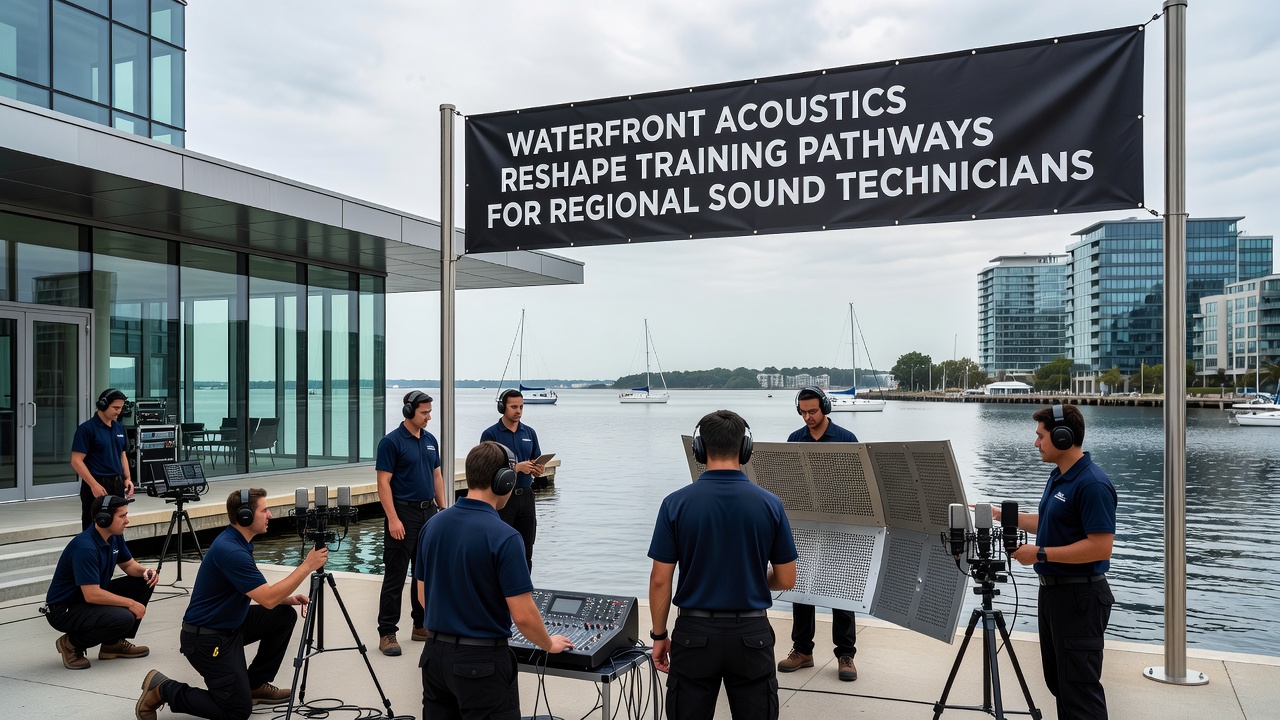
Industry reports indicate that enrollment in these specialized tracks increased 25 percent between January and September 2026, driven by venue operators who seek technicians familiar with both digital modeling tools and physical deployment strategies suited to dynamic water-adjacent spaces.
Integration with Broader Professional Development
Regional sound technician associations collaborate with academic partners to deliver workshops that combine acoustic physics with practical rigging skills, and these sessions often reference case data from events held at similar waterfront locations worldwide. Technicians learn to apply absorption coefficients and directional speaker calculations that address water-induced echo patterns without relying on traditional indoor absorption materials.
External resources such as research summaries from the Acoustical Society of America provide baseline metrics that training programs adapt for local conditions, while guidelines from Australian training authorities offer comparative frameworks for handling wind-driven sound drift in open-air settings.
Technicians who complete the updated pathways receive credentials that specify waterfront competency, and employers in coastal districts increasingly list these qualifications in job postings as venues schedule more events near harbors and bays through the remainder of 2026.
Case Examples from Regional Implementations
In one documented rollout, a training cohort worked at a waterfront amphitheater where they mapped sound decay rates across different tide stages using portable analyzers, and results showed measurable improvements in audio consistency after applying revised equalization curves. Another group focused on microphone windscreen selection and placement angles to counter cross-breeze interference, producing recordings that met broadcast standards despite variable conditions.
These examples illustrate how programs translate theoretical models into repeatable field practices, and participants note that the combined approach reduces setup time while maintaining output quality across multiple performance nights.
Conclusion
Waterfront acoustics continue to shape certification standards for regional sound technicians as programs expand to cover environmental variables unique to coastal sites, and October 2026 marks a point where many updated pathways reach full implementation across training networks. Observers note that ongoing data collection from installed monitoring systems will likely inform further refinements to curricula in subsequent years.